


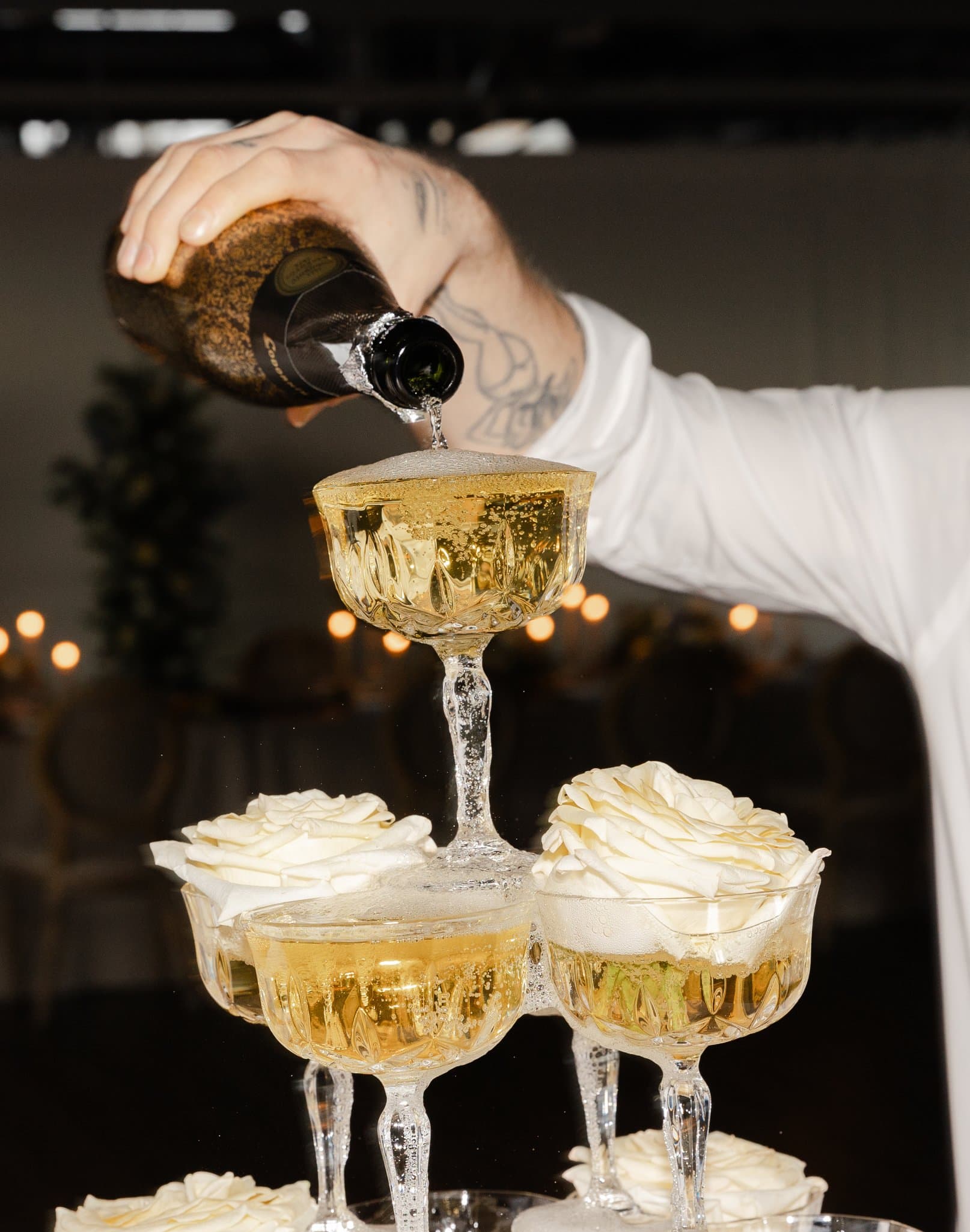
The bar is where every event actually begins. Here's how bar service really works in British Columbia, the four service models, and how to design something guests remember instead of something generic.
At a wedding, a corporate gala, or a private dinner, the bar is where the room first starts to feel like a room. Guests arrive early, often a little unsure of where to stand, and they head straight for a drink. The ninety seconds from glass-in-hand to first conversation is the entire chemistry of cocktail hour. A great bar moves that along; a slow one — long lines, vague choices, untrained staff — stalls the whole evening before it starts. The bar is not decoration. It is the social engine of your event, and it deserves as much thought as the menu.
How bar service legally works in British Columbia
Premium hosts are often surprised that BC does not run on the American model. A quick, plain-English version of the framework:
For a private event at an unlicensed venue, you will usually serve under a Special Event Permit from BC's Liquor and Cannabis Regulation Branch — you purchase the alcohol, and our certified team serves it. At a licensed venue — many hotels, galleries, and restaurants — liquor is the venue's responsibility, and we coordinate selection, glassware, and pacing around their licence. We can also handle selection and service through our hospitality partners, so you receive one itemized wine and spirits bill rather than a markup from us. And in every case, every bar staff member working your event holds a Serving It Right certificate — that is the BC standard, and we staff to it without exception.
The four bar service models
Open bar. You cover everything poured. It is the most generous option and suits corporate clients and milestone weddings where hospitality is the headline. The trade-off is that it scales with consumption — a thirsty crowd in a warm room runs higher than a temperate evening.
Consumption bar. Guests experience the same free-flowing bar, but you are billed on what is actually poured at the end of the night. It is the most common model we run for premium events, because it keeps flexibility on the total without ever imposing on guests.
Limited bar. A curated short list — beer, wine, and one or two signature cocktails. It suits tightly themed events, brand launches with a signature drink, and dinner-focused evenings where the bar is a setup rather than a destination. The one requirement is clear guest communication so nobody queues for something you are not serving.
Cash bar. Legal in BC and common for fundraisers, though rare at premium weddings and galas. It has its place — it simply shifts the tone of an evening, so it is worth choosing deliberately.
Designing a bar menu
The bar menu is its own small artefact, and a few choices carry most of the weight. Two to four house cocktails, tied to your theme or the season, which we develop in tastings four to six weeks out. A local wine selection leaning on BC producers — two whites, two reds, and a sparkling wine is a strong default. A spirits tier you have chosen on purpose. At least a couple of BC craft beers with a non-alcoholic option alongside. A genuine zero-proof and mocktail section, which now reads as respect for your guests rather than an afterthought. And, for seated dinners, coffee and tea service with dessert — easy to forget, but it lives in the same logistics as the bar.
Signature cocktails: a small lever, outsized returns
One or two signature cocktails do more work than almost anything else behind the bar. Tie them to your colours or your theme, develop them in a tasting a month out, and get the details right — the same drink in the wrong glass loses much of its impact. Print the cocktail menu so guests order it like a card rather than discovering it by accident, and brief the team so every server can describe it with confidence. Done well, these are the drinks that end up photographed and remembered — and we design them to talk to the food, so the flavours line up across the evening.
The logistics that make or break a bar
What separates a great bar from a slow one is rarely the drinks — it is the operations. Staff to real ratios: roughly one bartender to fifty guests at cocktail hour, easing off as the night settles. Place the bar where early arrivals can find it, away from food traffic, with room for a short queue that does not block the floor. Plan glassware volumes for breakage and for guests who set a glass down and pick up a fresh one. Have ice and a water station ready before the doors open, so no one ever waits for water. And design the wind-down — when dinner ends, the bar eases off and coffee service takes over for twenty minutes. Done well it is invisible; done badly it is the awkward gap everyone notices.
Compliance and care
A professional bar is also a responsible one. Every member of our bar team is Serving It Right certified, cut-off protocols are agreed with you in advance, and underage controls are briefed for every event — particularly corporate family days and post-graduate evenings. Your permit or the venue's licence needs to be in order before service day, and we will tell you exactly what that means for your event. None of this is bureaucracy for its own sake; it is what lets the night feel easy.
Where to start
A bar tasting is the single highest-return conversation in event planning — it comes after the menu is roughly set but before invitations go out. We host them in our Vancouver kitchen, with Okanagan tastings on request, and the written proposal that follows lays out the bar programme, staffing, glassware, and service timeline in full. When you are ready, book a bar tasting with our team — and if you are still weighing the rest of the evening, our guide to building a realistic catering budget is a good next read.
Monika Momeni
Owner & Operator

